Owner-builder electrical work: what you cannot do yourself in South Australia
A building approval and a nail gun are not an electrical licence. Prescribed work still belongs to a licensed electrician, and the certificate still has to exist.
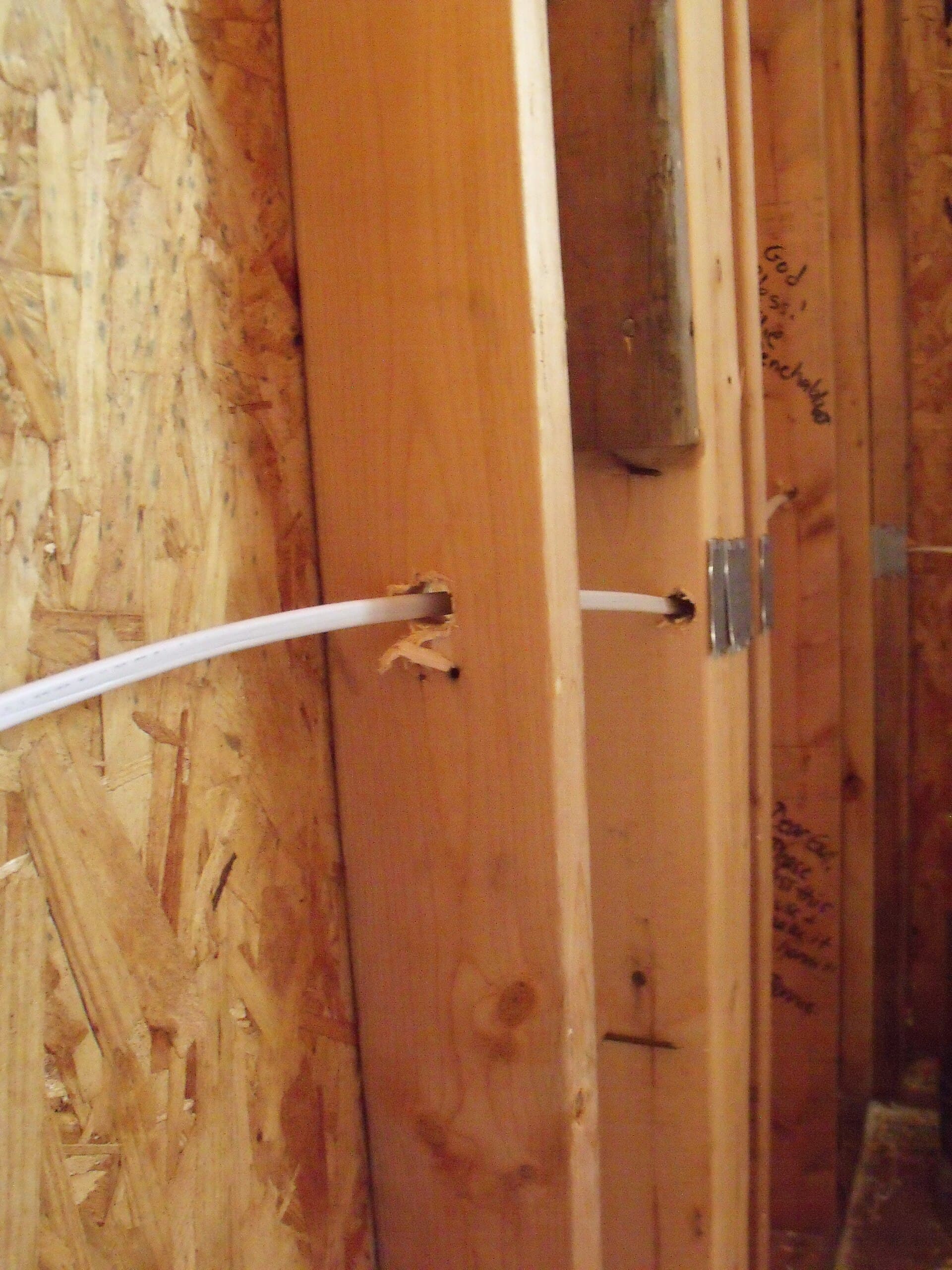
Photograph: Amy Bonilla. Licence: CC BY-SA 2.0. Source on Wikimedia Commons. Also listed on our image credits page.
There is a moment, usually on a Saturday in the Hills or in a half-renovated bungalow west of the parklands, when an owner-builder looks at a roll of TPS and thinks: I have already learned to hang a door. How different can a cable be? Different enough that South Australia does not let you find out on a live installation. A building approval, a nail gun and a cheerful YouTube manner are not an electrical licence. The work is still prescribed. The person who does it still has to be licensed. The job still has to produce a Certificate of Compliance.
This is the piece we send to people who have just bought the cable. It is written in the calm voice on purpose. The facts are not calmer if we shout them.
The permit that does not cover copper
Owner-builder permission in this state is a building idea. It says something about who is taking responsibility for a building project. It does not deputise you as an electrician, a gas fitter or a plumber. Those are separate occupational licences, administered for electrical workers and contractors by Consumer and Business Services, with the technical regime sitting at the Office of the Technical Regulator.
The distinction matters because the paperwork arrives in the same season. A planning consent, a building consent, a pile of conditions, a conversation about bushfire overlay or heritage fabric — and then a hardware invoice for cable, clips and a consumer unit that looked manageable on the shelf. The building file can be in excellent order while the electrical plan is a pencil sketch on the back of a paint colour chart.
If you are the owner-builder, your job on the electrical side is civic and dull: decide what the house needs, check that the electrician is licensed, let them design and install the work, and keep the Certificate of Compliance. Your job is not to “rough it in and have them just connect it”. Licensed people cannot honestly certify what they cannot verify. A roof full of unmarked cable is not a favour. It is a problem.
What prescribed electrical work means in a house
South Australia treats a wide band of fixed electrical work as prescribed. In ordinary domestic language that includes new circuits, alterations to existing circuits, switchboard work, relocating or adding powerpoints and lights, hard-wiring appliances, installing ceiling fans, connecting ovens and cooktops, and the energy equipment that now lives in garages — inverters, batteries, wall chargers. It includes the shed sub-board. It includes the outdoor circuit for the future alfresco.
We are not going to invent a numbered exemption list and hope it survives the next regulatory tidy-up. The conservative rule for an owner-builder is simple. If it is part of the fixed installation, if it needs isolation, if it will still be there when the house is sold, it is not a DIY electrical project. If you are unsure, it is not a DIY electrical project.
Plug-in appliances, a lamp in an existing socket, a device the manufacturer intends you to use without opening the installation — those are household use. The moment you take the cover off a switchboard, cut a cable, or decide that a powerpoint would look better three metres to the left, you have left household use.
What you still cannot do
You cannot run the rough-in and call it preparation. You cannot install the switchboard “to save them time”. You cannot move a bathroom light because the tiler is waiting. You cannot wire a granny flat as a Saturday project and ask a licensed person to leave a certificate on Monday without testing, opening and, often, redoing the work. You cannot connect a generator to the house wiring because the Hills lost supply overnight. That last one is not only a licensing problem. It is how people back-feed a street and put a linesperson in hospital. This journal will not describe how to do it.
You cannot treat extra-low voltage garden lighting as a free-for-all just because the voltage is lower. Some decorative systems are sold as plug-in kits; some are not. If a transformer, a buried cable and a connection to the household installation are involved, get the licensed person to say where the job starts. Do not decide that “it’s only twelve volts” is a legal analysis.
You cannot supervise yourself. An apprentice is supervised by a licensed worker. An owner-builder is not an apprentice and is not a supervisor. Watching six videos does not create a training contract.
Prescribed work belongs to a licensed electrician. The licence is searchable. The finished job should produce a Certificate of Compliance that can be shown to an insurer, a conveyancer or a tenant.
You also cannot hide the work. A later buyer, a later electrician and the Office of the Technical Regulator are all in the future of a house. Uncertified cables in a cavity are not a secret you get to keep as a personality.
What you can do without pretending to be the electrician
You can plan the rooms. You can decide where you want lights and power in the same way you decide where you want taps: as a brief, not as an installation. You can buy light fittings as objects and leave them in their boxes for the licensed person to assess. You can keep the roof void clear of stored blankets so the electrician can move. You can photograph the existing board, with the main switch off only if you already know how to isolate the house safely from the household main switch and you are not opening the live internals — and if you do not know, you can photograph the closed cover and wait.
You can read AS/NZS 3000 in plain English so that a bathroom conversation is not a surprise. You cannot use that essay as a licence.
You can be on site, ask questions, and refuse to be rushed by a trade sequence that wants electrical decisions in the time it takes a coffee to cool. Good electricians would rather come back than guess through a tiled wall.
You can, in most households, change a light globe or a plug-in smoke alarm battery according to the manufacturer’s instructions. You cannot use that permission as a ladder into the wiring behind the rose.
Hiring in, as if the project were grown-up
Treat the electrical contractor as a consultant before they are a pair of hands. Show them the house, the existing board, the solar if it exists, the stove you have already purchased, and the shed you have already poured. Ask whether the supply and the board can carry the plan. Ask how wet areas will be handled before the waterproofing. Ask what the certificate will describe.
Search the worker and the contractor on the Consumer and Business Services licence check. Match the names to the quote. Do not pay a large deposit to a number that does not exist on the register. The rules hub is this journal’s longer version of that civic habit.
If the project is a secondary dwelling, a workshop or a Hills house with a generator fantasy attached, say so early. Those jobs collect extra rules — network connection, changeover equipment, metering — and they collect extra ways to get someone hurt. They do not become owner-builder electrical work because the building file is in your name.
If you have already done the work
Stop. Do not energise a circuit you installed yourself. Do not “just see if it works” with the main switch on and a hopeful expression. Do not connect it to the board as a test. Hire a licensed electrician to inspect what is there. Be honest about what you did. They may cut out work they cannot verify. That is not a shakedown. That is how they remain entitled to sign a certificate.
If the work is already live and something feels wrong — warmth, a smell, a buzz, a device that trips — treat it as a safety problem. If there is smoke or flame, leave and call 000. If the problem is on the street or at the service, that is SA Power Networks. If the problem is the installation you built, it is a licensed electrician and, if the work was unlicensed, the Office of the Technical Regulator.
This publication’s editorial standards forbid us from dressing unlicensed work as a lifestyle. We will not publish a diagram of how to rough-in a house. We will keep telling owner-builders the same sentence. You can build a great deal. You cannot be your own electrician. Hire one you can search, and keep the paper.
Questions readers send the desk
- Can an owner-builder in South Australia wire their own house?
- No. Owner-builder permission covers building work, not prescribed electrical work. Hire a licensed electrician, check the licence, and keep the Certificate of Compliance.
- Is changing a light globe or a plug-in lamp electrical work I can do?
- Replacing a lamp in an existing fitting, or using a plug-in appliance, is ordinary household use. Installing new circuits, moving powerpoints, opening the switchboard or hard-wiring equipment is not.
- What if I have already run the cables myself?
- Stop and do not energise the work. Have a licensed electrician inspect it. They may need to redo parts they cannot verify. Do not treat a later certificate as a favour you can demand for unsafe DIY.