Home batteries after the subsidy years: a practical buyer’s brief
Once the headline subsidy is gone, a home battery is a cycling machine with a fire rating, a warranty and a job to do. Decide whether that job is backup, arbitrage or both before anyone measures the garage.
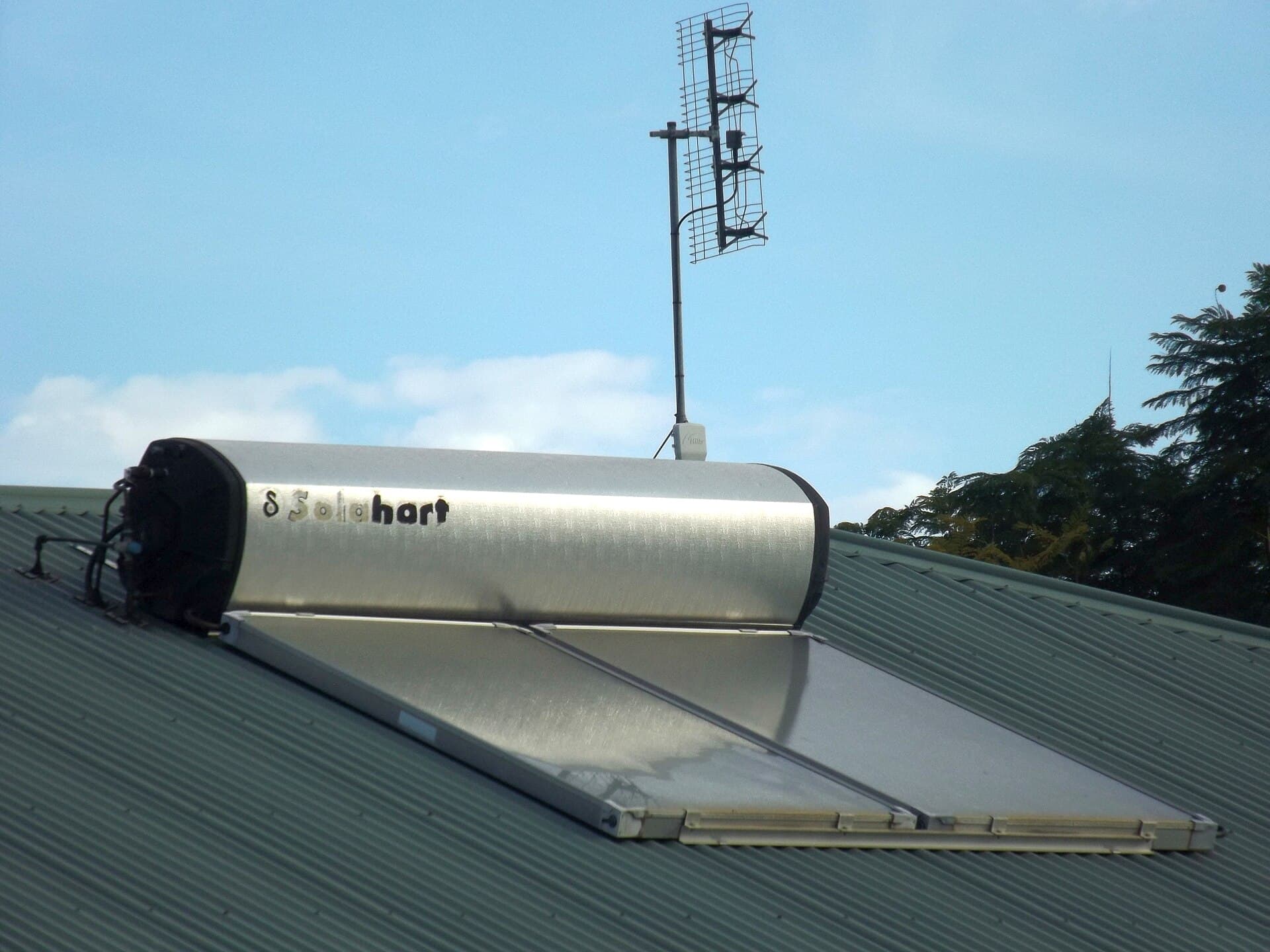
Photograph: Shiftchange. Licence: CC0. Source on Wikimedia Commons. Also listed on our image credits page.
A home battery in Adelaide used to arrive in conversation wearing a government logo. The South Australian Home Battery Scheme made lithium look like civic infrastructure and trained a generation of quotes to lead with a subsidy rather than a use case. The scheme is history. Later programs, when they exist, will also become history. What remains on the garage wall is a cycling machine that gets hot, ages, occupies switchboard space and may or may not keep the lights on when a cell collapses over the Hills.
This journal is not a shopfront. We do not publish installed prices per kilowatt-hour; those figures rot and become folk wisdom. We do write about the jobs a battery can do, the way it wears, and the cupboard that has to host it. If you have not read solar, inverters and export, start there. A battery without an honest account of the array and the network is a box waiting for a story.
What a battery is for, once the slogan ends
There are two honest domestic jobs. One is arbitrage: store midday solar, or cheap off-peak energy, and discharge it into the evening peak. The other is backup: keep a defined set of circuits alive when the street is dead. Virtual power plant participation is a contract layered on the first. Many quotes blur the three until the owner believes they have bought resilience, a tariff strategy and a civic gesture in one enclosure. They may have bought only a daily cycle with an app.
Arbitrage cares about round-trip efficiency, usable capacity, evening load and the export limit already on the inverter. Backup cares about which circuits are essential, how long you want them, whether the inverter can form a grid, and whether anyone has built a changeover that will not back-feed the street. Those designs can share a cabinet. They do not share a commissioning checklist. Northern suburbs rooftops — Mawson Lakes in particular — often have more daytime surplus than the house can use. That is an arbitrage conversation. A Blackwood or Stirling house that loses the feeder when a gum comes down is a backup conversation, and belongs beside the storms and outages hub rather than a payback spreadsheet. Pooraka and Glenelg sit in between: older boards, mixed roofs, and owners who want “the battery” because the last heatwave made the street feel provisional.
A battery bought as jewellery for the garage will still cycle, heat and age. The chemistry does not care that you thought of it as a hedge against the next storm.
If the salesperson cannot say which job you are buying, you are not buying a design.
Cycling is the real specification
Lithium cells wear by use and by time. Throughput is the wear marketing copy buries under a round number of years. A pack that cycles fully every day will hit a throughput limit sooner. A pack that sits full waiting for a blackout will hit calendar ageing, and will do so with less grace in a hot garage. Ask for the cycle or throughput figure next to the warranty years, the residual capacity at which the warranty ends, and how usable capacity relates to the nameplate. The gap between those two numbers is the first place a quote becomes poetry.
Depth of discharge, backup reserve and operating temperature belong on the same page. A Mawson Lakes garage that faces west in February is a climate. An Aldgate laundry that drops toward single figures on a July night is another. Installing outside the chemistry’s window is how warranties become correspondence. A virtual power plant contract is also a cycling decision. If you need a reserve for backup, that reserve is capacity taken out of the arbitrage and out of any aggregator’s reach. Write it down. Do not leave it as a slider that defaults to optimistic.
Backup is not the same job as arbitrage
A simple grid-tied battery follows the meter. When the street dies, many such systems shut down because they must not energise a dead grid. That is correct behaviour. It is also the moment an owner discovers they bought a tariff instrument. Backup needs an inverter that can island, isolation from the network, and a defined set of loads. Whole-house backup sounds tidy and is often larger than a fridge, lighting, a modem and one general-purpose outlet. In the Hills a borehole pump may belong on that list. In Glenelg it may be the fridge. Write the list before you write the capacity.
A licensed electrician should design the isolation so the battery cannot back-feed SA Power Networks. The Certificate of Compliance should cover that work. “Backup ready” without an essential-loads board or a tested changeover is a brochure phrase. The off-grid Hills essay treats the full fantasy; this brief only needs the suburban version: you are still on the grid, and you would like a slice of the house to persist. Generators remain part of a serious Stirling or Aldgate conversation after a multi-day outage. A battery that covers the first evening and a generator that covers the rest is a system. A battery asked to be a generator is a disappointment with a warranty card.
Switchboard space and the quiet constraints
Open the board before you open the catalogue. Hybrid inverters, battery isolators and a new essential-loads enclosure do not levitate into a 1960s laundry cupboard. They need ways, labels, and a neutral arrangement that was not designed for a second source of supply. The energy hub keeps saying this because the quotes keep not saying it. A fuse board is a stop sign. An EV charger and a heat-pump circuit, if they are coming in the same decade, belong in the same look at spare capacity.
SA Power Networks still cares about the inverter, the connection and what the site may send to the street. Adding storage does not exempt anyone. Ask what is being lodged, and keep the response with the Certificate of Compliance. Three-phase houses should not assume the battery sits wherever the solar already sits. If the installer has not asked how the phases are used, they have not looked.
Fire, siting and the Hills
Siting is not an aesthetic choice. Habitable rooms, escape paths, flood levels and other hazards are the start of the conversation. Garages are common because they are already a bit industrial. They are also where petrol, chargers and forgotten aerosols live. Ask for the manufacturer’s clearance, the ventilation requirement, and the South Australian rule for this chemistry — not a gesture at “it’s approved”. Stirling, Aldgate and the wider Adelaide Hills add bushfire. A unit under a timber soffit is a different object from a unit in a non-combustible garage. Blackwood laundries can be hot, tight boxes with a gas heater for company. Marino and Glenelg add corrosion. Pooraka adds heat and dust. None of that is a reason to refuse storage. It is a reason to refuse a siting chosen because the ethernet cable was short. Do not let the cabinet become a shelf, and do not assume a hallway smoke alarm is a battery fire system.
Warranties without a price tag
A warranty is a set of conditions. Years without a throughput cap are not the same product as years with one. The residual-capacity clause is the actual promise. A licensed electrician’s Certificate of Compliance does not extend the cell chemistry. Ask who you ring in year six, and whether that entity still has a presence in Adelaide. Get the monitoring account, the serial numbers and the commissioning report. A pack you cannot diagnose is a pack you do not own.
Treat every scheme, including whatever has replaced or not replaced the Home Battery Scheme, as a date-stamped political object. Verify it on a government page. Do not let a dollar figure — we will not supply one — decide a siting or a cycling regime you will live with after the rebate is forgotten. If the honest job is backup in the Hills, design the island. If it is soaking a Mawson Lakes surplus the feeder will not take, design the cycle. If you want both, pay for both, in board space and in reserve. The chemistry will not do the job you meant to mention.
Questions readers send the desk
- Is the South Australian Home Battery Scheme still a reason to buy?
- No. Treat it as history. The scheme ran and closed. Later programs at other levels of government appear and change. This desk does not publish rebate dollar figures. If a quote leans on a current incentive, ask for the official page, the date and the eligibility test, then decide whether the battery still makes sense without it.
- Will a battery keep the whole house on during an outage?
- Only if it was designed and wired as a backup system, with a defined essential-loads circuit or a whole-house changeover the inverter can actually support. A battery that only cycles for a tariff will sit there during a blackout and do nothing useful. Ask which circuits survive, for how long, and what happens when the sun is down.
- What should I look for in a warranty if I ignore the marketing capacity?
- Calendar years, cycle or throughput limits, the residual capacity at which the warranty ends, and the list of things that void it — including siting, operating temperature and who may service the unit. Ask who stands behind the paper in Adelaide if the original seller has changed names.