Neutral faults: the quiet danger in older South Australian homes
A lamp that glows when it should be off is not a quirk. In older South Australian houses a broken neutral can float voltages, tingle metalwork and cook appliances. The MEN system only works if the bond is intact.
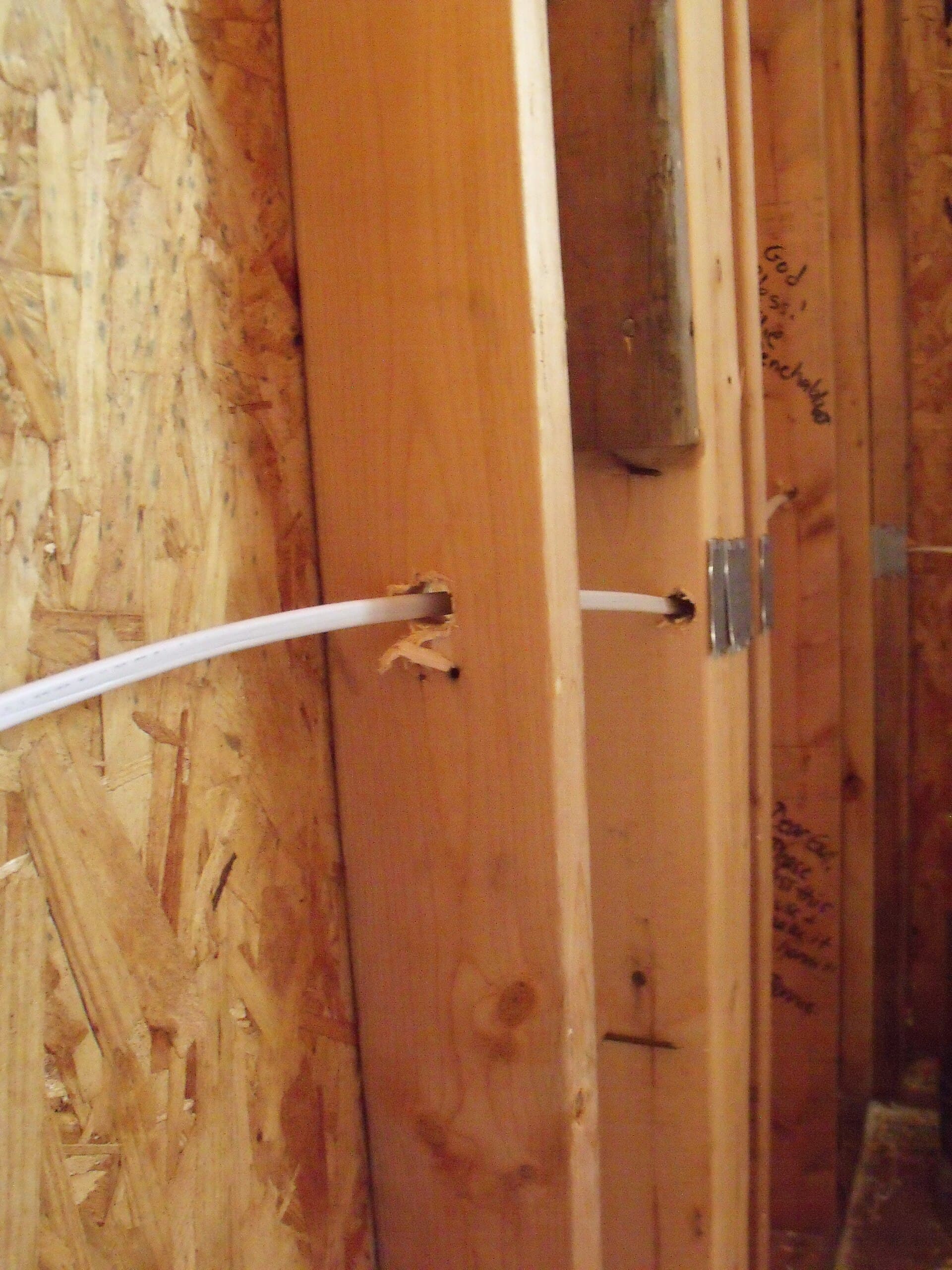
Photograph: Amy Bonilla. Licence: CC BY-SA 2.0. Source on Wikimedia Commons. Also listed on our image credits page.
A lamp that glows when the switch is off is the sort of thing Adelaide owners learn to live with. They call it a quirk. They change the globe. They mention it at a barbecue in Unley as if the house were being charming. It is not being charming. In an older South Australian installation a glow like that is one of the polite ways a broken neutral introduces itself. The impolite ways are a tingle on a tap, a fridge that dies without a bang, or a row of appliances that fail in the same week for no reason a retailer can name.
This is a note on the conductor people forget. Active gets the attention. Earth gets the speeches. Neutral is the return path, and in the Australian MEN system it is also half of the bond that makes earthing work. When that path fails, voltages wander.
What a neutral is doing in an Adelaide house
In a sound installation, current goes out on the active and comes back on the neutral. The Multiple Earthed Neutral — the MEN link — bonds earth and neutral at the main switchboard so that a fault to exposed metal has a reliable path and the protective devices have something to act against. AS/NZS 3000 treats that arrangement as ordinary. It is ordinary only if the bond is intact and the neutrals are continuous.
A broken neutral is a lost or high-resistance connection on that return path. It can sit in a meter box, in a corroded MEN link, in a twist of conductors that was never a terminal, or in a junction in a western-suburbs cavity that has not been seen since the cable was stapled there. The circuit may still look alive. Lamps may still light. They may light too brightly, too dimly, or in rooms that were not asked. Appliances may see more voltage than they were designed for, or less. People may feel a tingle on something that is supposed to be earthed.
Residual current devices and RCBOs watch for imbalance between active and neutral. They are not a complete defence against a supply-side or MEN failure, and they are not a reason to keep using a circuit that is already behaving strangely. If the house has no RCD protection at all — still common on ceramic fuse boards — the argument for a licensed electrician is older than the glow.
Where Adelaide hides the break
The meter box is the unfashionable suspect. In a great many Adelaide streets the service arrives at a box on the front wall or a pole, often facing west, often with a lid that has been painted shut by a previous owner who liked the trim colour more than the hinges. Western-suburbs cavity brick in Thebarton, Mile End, Hindmarsh and the older edges of Findon puts that box in the sun and the rain. Neutrals loosen. Connections cook. A fault at the front of the house then writes itself across every room, which is why a laundry board can look innocent while the lamps do not.
Unley bungalows hide a different archive: underfloor junctions, roof-space connectors, and the odd neutral borrowed when a sleepout became a room. The timber is kind to access if you lift a board. It is not kind to a connection sitting in dust since the 1960s. Norwood villas add masonry that holds moisture, and meter enclosures older than thermoplastic sheathing.
The 1960s brick veneers of Campbelltown and Modbury are simpler buildings with the same MEN obligation. A missing or painted-over MEN link in that cupboard is not a heritage detail. Hills timber in Stirling and Belair adds movement and condensation: frames flex, and terminations that were tight in January are not always tight in July. It requires someone to look at the actual joint. A glow and a tingle also belong on the wider list of warning signs of an electrical fault.
A broken neutral does not announce itself with a bang. It rearranges voltages until something else does.
Glowing lamps, tingling metal, odd failures
The glow is the one owners photograph: a bedroom lamp that stays faintly on, or a rangehood light that behaves as if it had a night-light setting nobody specified. That change, when a heater or kettle is asked to work, is useful information for a licensed electrician. It is not a prompt to start tightening terminals while the service is still on.
Tingling is the one owners rationalise. A tap, a fridge body, a metal window winder on a humid night. South Australian houses have enough metallic plumbing and enough older earthing arrangements that a lost bond can put a voltage where a hand expects none. Do not turn the tingle into a test. Do not compare notes with a neighbour while both of you hold the same railing. If you need the house quiet, use the main switch — once, firmly, as a shutdown, not as an experiment — and then wait for a licensed electrician. Nobody here will tell you to work live. A floating neutral is a good argument for that sentence.
Appliances that fail in clusters are the expensive version. A broken neutral can feed them something that is not the 230 volts they were promised. The retailer will replace the first kettle. The second one should have been a phone call.
The MEN link, and why “the earth looks fine” is not a test
Owners sometimes open the board, see a green-and-yellow conductor, and decide the earth is present. Presence is not continuity, and an earth conductor is not a substitute for a missing MEN bond. In the Australian system the earth and the neutral are joined at the main switchboard. If that join has corroded, been used as a spare terminal, or never been made properly after a board was shifted, the installation can look populated and still be wrong.
A fuse board upgrade that ignores the MEN arrangement is half a job. The companion essay on fuse boards to RCD upgrades is about residual current protection and overcrowded trays. This one is about the quieter conductor on the same cupboard. Both essays assume the same standard. AS/NZS 3000 is not optional because the house is old. Age is the reason to check, not the reason to waive.
RCBOs on the final subcircuits will still trip on many earth-faults after a board is brought up to date. They will not rewrite a broken incoming neutral. They will not invent a MEN link. They will not make a corroded meter-box connection safe because the laundry now has a plastic surround. Protective devices sit on top of a sound supply arrangement. They do not replace it.
Meter boxes, storms, and the front of the house
Adelaide storms are short. The damage they do to connections is not always visible as a fallen branch. Water in a meter box, a lid that no longer seals, a burn mark at a terminal — those are the afters. If lamps misbehave in the hour after restoration, treat the event as a fault, not as “dirty power” that will settle. Dirty power exists. So do loosened neutrals. A licensed electrician can tell the difference with instruments. A torch and optimism cannot.
The front-of-house box is also where a previous owner’s “upgrade” sometimes stops: a new meter, an old neutral, a board inside that was never revisited. Energy work is still electrical work. It still ends with a Certificate of Compliance. It should not begin on a floating return path.
If the house is being rewired anyway — an Unley bungalow with a kitchen coming — ask that the neutrals and the MEN link be treated as first-class work. The method for doing that without gutting a bungalow is in rewiring a 1950s Adelaide bungalow. The civic half sits in licensing and standards.
What a licensed electrician is actually doing
The useful visit is isolation, inspection of the board and the meter enclosure, testing of the MEN connection, and a search for the joint that is no longer a joint. It is not a man in a van tapping a screwdriver across live terminals to see what sparks. If a quote sounds like that, find another licence number.
You should see a Certificate of Compliance for prescribed work. You should not be asked to hold a probe or “just test the tap again” while the service is on. The switchboards and wiring hub exists for the neighbouring essays.
If a lamp is glowing, if a tap tingles, if a cluster of appliances has failed, stop using the circuit. Shut the house down at the main switch if the behaviour is spreading. Then wait. The quiet danger is not that nobody told you the theory. It is that the house had been telling you, softly, for months, and the glow had been treated as a personality.
Questions readers send the desk
- Why would a lamp glow when the switch is off?
- A broken or high-resistance neutral can leave a circuit without a proper return path. Voltage then finds another route — sometimes through another lamp, sometimes through an appliance. The glow is not a feature. It is a reason to stop using the circuit and call a licensed electrician.
- Is a tingle on a tap always a neutral fault?
- No. It can be a failed earth, a lost MEN bond, a neighbour’s fault on a shared metallic path, or something in the water service. Do not diagnose it with a wet hand. Treat it as a fault, isolate what you can from the main switch if you need to, and have it tested.
- Can a meter box on the street front cause problems inside the house?
- Yes. In Adelaide the service and the meter often live in a box that faces the western sun and the winter rain. A loose or corroded neutral at that box can rearrange voltages through the whole installation. The laundry board will look innocent. The lamps will not.